A Think-Tank for Jamaica: Improving Political Decision Making through Research, Analysis and Consensus Building.
Basil Waine Kong, Ph.D., JD
Nothing is more powerful than an idea whose time has arrived. Chile climbed from 3rd world status to a booming economy with good ideas and purposeful implementation. Their leaders decided to rid the country of graft and corruption, educate their people, feed their citizens and increase exports by expanding agriculture. These initiatives transformed a country in a brief ten years.
It is becoming increasingly clear that Jamaica needs an institute where the full time occupation of really bright and committed people is to focus on generating ideas and guiding the changes needed to empower our people to unleash their energy, creativity, innovative and competitive spirit in their quest for financial security, health and happiness. The value of an institute to address a wide array of public policy issues at both national and local levels cannot be overestimated. Let us act quickly before we cross the Rubicon and lose hope. Without vision, our people perish.
Almost all important political and social change started with an idea. The ideas often originated with people who spent a great deal of their lives thinking and focusing on solutions to problems that plague the rest of us. Across the political or ideological spectrum, it would be difficult in the modern age to point to any major public policy initiative that did not originate from a think tank of some sort. Well researched, analyzed and developed ideas are important first steps to addressing the social, economic and legal issues facing our country. Objective non-partisan analysis and effective solutions are desperately needed and are essential for nation building.
As the incubator of innovative ideas, the proposed Jamaican Think-Tank (JTT) would work with decision makers in both the public and private sectors to find solutions to our difficult, sensitive, and important problems. In the United States, Health Care Reform, welfare reform, School Vouchers, Social Security, Medicare, Medicaid, the War on Poverty Program and The Great Society initiatives all evolved out of think tanks.
Jamaicans have excelled in every field of human endeavor. Unfortunately, the United States, Europe and Canada are, on the most part, the beneficiary of our talents and contributions because of the migration of talented individuals from our island. These scholars are anxious to participate in the development of Jamaica in some meaningful way but are never asked. There is currently no forum to garner their input and make use of their formidable insights and intellectual acumen, the incubators of which may have been cultures far from the shores of Jamaica.
The Internet has made communication cheap, easy and immediate. It is now possible to bring a diverse group of scholars together to interact and brainstorm (at will) regardless of where they may live in the world. Because we are goal oriented, we can also contract with scholars to research specific topics and encourage solutions to well-defined problems and judge their righteousness based on their success in addressing Jamaica’s challenges.
Just like a butterfly flapping its wings can be the start of a hurricane, an idea can grow into an action and a movement once the tipping point is reached. An original idea may occur to someone while reading, praying, sitting in a barbershop,conversing over a game of dominoes or having a drink with friends. It could be subsequently presented in an article or book, brought up in discussions with more friends and colleagues in a speech at a conference or even a simple letter to the editor published in a local newspaper. As more and more people begin to talk about the idea, it will be helped along by people who may benefit financially in its adoption and the audience expands. Eventually political leaders climb on board and make it happen often claiming the credit.
The objectives of our Think-Tank:
1. supply experts to testify on various laws under consideration;
2. write articles for the op-ed pages of newspapers, and appear as TV commentators;
3. advise political aspirants and elected leaders;
4. lead orientation seminars to train incoming members of parliament;
5. create viable alternatives to programs that are not meeting expected objectives;
6. Study, suggest solutions and help to implement streamlined and workable government bureaucratic procedures;
7. Conduct impact studies for proposed programs;
8. Investigate unmet needs in the country and propose programs that could address these needs;
9. Investigate how some government policies are causing road blocks and stifling innovation and find the private sector solutions to better address and reform them;
10. Encourage research and provide a forum for scholarly interaction;
11. Derive income from consulting or research work related to our mandate (Ideas can be marketed like products);
12. Build expertise and institutional memory that could be brought to bear in later years when our political leaders are ready to address them;
13. Convene monthly issue related as well as an annual high level conferences;
14. Travel to distant shores to learn how other countries address these challenges.
This proposed non-government organization (NGO) will be home to our greatest and most creative Jamaican intellectuals and provide them with a forum to offer advice as well as prepare and publish position papers outlining clear options, and solutions that will be both effective and enduring if implemented.
Some of the formidable challenges needing thoughtful attention from the JTT include:
1, Overcoming Poverty.
2. Reducing Crime and Violence.
3. Eliminating Illiteracy by educating the all Jamaicans regardless of their ability to pay for school fees.
4. Developing skill training programs.
5. Promoting business and overcoming unemployment.
6. Promoting higher education regardless of the ability of a student to pay.
6. Improving the health of our people.
7. Using the law to meet the needs of our people.
8. Maximizing the use of renewable and alternative energy.
9. Providing adequate housing.
10. Protecting and improving our environment (air, water, oceans, rivers, etc.).
11. Developing the talents of our people---making it possible for them to become all they can be.
If we play or cards right, I foresee an explosion of intellectual activity and the generation of ideas that will transform and guide Jamaica to prosperity for all its citizens. One does not have to be a politician or actively engaged in the political process to change the direction of our country. This could be the beginning of a revolution that will set the stage for Jamaica to become the paradise it was always meant to be.
Do you know how this institute could be funded? Tell me what you think!
_______________________
JAMAICAN IRONIES
Stanley Redwood
Jamaica has the most churches per population with some of the highest levels of immorality, criminality and corruption. We have one of the highest debt to GDP ratio with one of the highest densities of the displays of affluence (cell phones, SUVs, mansions, etc.), with 50 plus million dollars mansions on streets gutted with potholes and with no running water. We are so renowned for our hospitality to tourists, yet so brutally violent to our own people. We are among the happiest peoples of the world, yet we are so frustrated, disappointed, angry and irritable. We are surrounded by such natural and feminine beauty, yet we are so coarse on the inside and require so much cosmetics, wigs and bleaching. We have such talents and potentials yet are so underdeveloped; and we have so much ambition juxtaposed with so much underachievement and mediocrity.
These paradoxes underscore the need for us to get to the heart of some of our fundamental and ideological issues and challenges. We have tended to come to our problems from the back end with remedies, rather than from the front end with prevention and mitigation which ought to include:
1. A spirit of patriotism,
2. Moral and social education,
3. Population growth control, (birth control),
4. Personal and collective pride, self-esteem/worth,
5. Personal and national fiscal prudence and restrictions,
6. Medium and long term planning, and
7. Human development, (with economic education and entrepreneurial training),
I am happy to see the Fourth (Regulatory) Branch of Government getting some currency, from the the Contractor General and ACP Justine Felice. Jamaica is in dire need of it. There should be a clear plan of action going forward. This could be a most abiding contribution to Jamaica's development if we can get our leaders to own and hone the related ideas.
Showing posts with label health care access. Show all posts
Showing posts with label health care access. Show all posts
Thursday, April 1, 2010

Friday, January 23, 2009
The Need for a System of Health Rather than a Health Care System in Jamaica
It is difficult to imagine that with all the sunshine, ocean, open spaces, and such a strong sports tradition, 20% of our children are overweight. All aesthetics aside, being fat ought not to be perceived as anything other than unhealthy. Obese children become obese adults.
As has been noted in The Gleaner, obesity has reached troubling proportions in Jamaica. Since 1980, we have seen a 50% increase in the incidence of obesity every decade. This dramatic rise in obesity is inevitably accompanied by an equally critical rise in diabetes, resulting in over 20% of Jamaican adults suffering from this awful disease. Diabetes is particularly nasty as it impairs eyesight, causes impotence, and may result in the amputation of toes and legs. How did a society where people walked miles each day, succumb to this plague of inactivity, diabetes and obesity? An unhealthy country is a country without a future.
The United States has taught the world that there isn’t enough money to pay for all the disease caused by obesity, lack of exercise, cholesterol, smoking and diabetes. However, the United States spends 20 cents of each dollar collected as revenue on health care. Still, the life expectancy of an average African American men is less than Jamaican men. The United States has a so-called ‘state-of-the-art’ healthcare system, yet they are way behind the rest of the world in promoting health and well-being. When a patient has a disease, treat the disease; similarly, when a large segment of a population has a disease, treat the country. If you want to reduce violence, crime and unwanted pregnancies in Jamaica, let children have the opportunity to know their grandparents.
Jamaica needs a system that promotes health and not an expensive “healthcare system” that only treats disease. In a country where the average household income is less than US$1,000 per year, Jamaica can ill afford to provide invasive and expensive medical services to treat illnesses that should have been prevented. A “System of Health” emphasizes prevention, while a “health care system” places emphasis on the treatment. By being proactive instead of reactive, we can inspire people to take health promotion and disease prevention seriously.
Jamaicans live on an island of sunshine and cool breeze and most of us must live and eat by the sweat of our brow. Europeans and Americans come to our island to lose weight through exercise and heart healthy eating, so why can’t we take advantage of these home grown remedies? If we consider the fact that most of the disease that plague us and cost so much can be prevented, it becomes apparent that promotion of heart health and exercise would allow enormous savings for the health care system. In fact, just about all the heart attacks, heart failure, strokes, diabetes, kidney failure (diseases that kill 50% of us) could be prevented by making simple adjustments to our lifestyles. Being proactive in health can add 10 more years to enjoy the company of our grandchildren and guide them to a happy, healthy and productive life. I grew up reciting the nursery rhyme about Humpty Dumpty who was lazily sitting on a wall, had a great fall and nothing could put him together again. If Humpty was not sitting on the wall, his risk of falling would be far less. We can take an important message from this nursery rhyme by understanding that no matter how good our reactive plans in medicine and surgery may be, it will never be as good as prevention. An ounce of prevention is always going to be worth more than a pound of cure.
At the Heart Institute of the Caribbean, I am fortunate to work for a private entity that excels in the gamut of these services. In the hopes of implementing a “System of Health” we are eager to share our secrets and methods for prevention with readers of the Gleaner. We also offer executive physicals that may help determine the risk of a premature heart attack, using state of the art diagnostic equipment and Board Certified Cardiologists. If you are already aware of your condition, there is absolutely no better place to receive treatment for a wide range of cardiovascular related diseases. We realize that treating disease in an expensive undertaking and so, we offer our services for less than 20% of the cost for the same services in the United States. Again, preferring that you didn’t have the disease in the first place, we counsel family members who come to the Institute to be treated for heart disease, encouraging prevention. If you are sick, you are not making money, you are spending it. The best place to put your money is in your health. Healthy people are likely to be wealthy people and at the end of the day, we want a System of Health, not just a healthcare system
While our government struggles daily with how to allocate our limited resources, it should be recognized that it would be a good investment to spend more on prevention. At present, the Government spends less than 5% on prevention of diseases and we need to increase our spending here to at least 25%. In a Gleaner article dated 13/8/2008, Prime Minister Bruce Golding, in identifying this problem addressed 750 delegates from 80 countries at the opening ceremony of the 57th August General Assembly of the International Federation of Medical Students’ Associations disclosing the fact that the Government is planning to launch an island wide program aimed at getting people to adopt healthy lifestyle practices. In outlining the Government’s plan, Prime Minister Golding emphasized the need to sensitize the public of the benefits of a healthy lifestyle, letting them know that “you can eat yourself to death in the same way that you can smoke yourself to death.” However, other than this speech, no much has been done in this arena.
Comparable to the above mentioned program, The Heart Institute of the Caribbean has developed a plan which involves an island wide tour aimed at training “Community Health Advocates” in various parishes. This plan also involves cardiac screening and group counseling thus effectively identifying the healthiest and most at risk communities in Jamaica. This way, we can educate and motivate our citizens to maintain good health.
Just as it would be unconscionable not to have an infectious disease program, it is unacceptable not to have a cardiovascular disease prevention program. Every citizen must recognize that if they do not take time to exercise and eat well, they will prematurely succumb to disease. God made us to be strong and physically fit, and by choosing to be “fat and lazy”, we will have to pay the price.
As has been noted in The Gleaner, obesity has reached troubling proportions in Jamaica. Since 1980, we have seen a 50% increase in the incidence of obesity every decade. This dramatic rise in obesity is inevitably accompanied by an equally critical rise in diabetes, resulting in over 20% of Jamaican adults suffering from this awful disease. Diabetes is particularly nasty as it impairs eyesight, causes impotence, and may result in the amputation of toes and legs. How did a society where people walked miles each day, succumb to this plague of inactivity, diabetes and obesity? An unhealthy country is a country without a future.
The United States has taught the world that there isn’t enough money to pay for all the disease caused by obesity, lack of exercise, cholesterol, smoking and diabetes. However, the United States spends 20 cents of each dollar collected as revenue on health care. Still, the life expectancy of an average African American men is less than Jamaican men. The United States has a so-called ‘state-of-the-art’ healthcare system, yet they are way behind the rest of the world in promoting health and well-being. When a patient has a disease, treat the disease; similarly, when a large segment of a population has a disease, treat the country. If you want to reduce violence, crime and unwanted pregnancies in Jamaica, let children have the opportunity to know their grandparents.
Jamaica needs a system that promotes health and not an expensive “healthcare system” that only treats disease. In a country where the average household income is less than US$1,000 per year, Jamaica can ill afford to provide invasive and expensive medical services to treat illnesses that should have been prevented. A “System of Health” emphasizes prevention, while a “health care system” places emphasis on the treatment. By being proactive instead of reactive, we can inspire people to take health promotion and disease prevention seriously.
Jamaicans live on an island of sunshine and cool breeze and most of us must live and eat by the sweat of our brow. Europeans and Americans come to our island to lose weight through exercise and heart healthy eating, so why can’t we take advantage of these home grown remedies? If we consider the fact that most of the disease that plague us and cost so much can be prevented, it becomes apparent that promotion of heart health and exercise would allow enormous savings for the health care system. In fact, just about all the heart attacks, heart failure, strokes, diabetes, kidney failure (diseases that kill 50% of us) could be prevented by making simple adjustments to our lifestyles. Being proactive in health can add 10 more years to enjoy the company of our grandchildren and guide them to a happy, healthy and productive life. I grew up reciting the nursery rhyme about Humpty Dumpty who was lazily sitting on a wall, had a great fall and nothing could put him together again. If Humpty was not sitting on the wall, his risk of falling would be far less. We can take an important message from this nursery rhyme by understanding that no matter how good our reactive plans in medicine and surgery may be, it will never be as good as prevention. An ounce of prevention is always going to be worth more than a pound of cure.
At the Heart Institute of the Caribbean, I am fortunate to work for a private entity that excels in the gamut of these services. In the hopes of implementing a “System of Health” we are eager to share our secrets and methods for prevention with readers of the Gleaner. We also offer executive physicals that may help determine the risk of a premature heart attack, using state of the art diagnostic equipment and Board Certified Cardiologists. If you are already aware of your condition, there is absolutely no better place to receive treatment for a wide range of cardiovascular related diseases. We realize that treating disease in an expensive undertaking and so, we offer our services for less than 20% of the cost for the same services in the United States. Again, preferring that you didn’t have the disease in the first place, we counsel family members who come to the Institute to be treated for heart disease, encouraging prevention. If you are sick, you are not making money, you are spending it. The best place to put your money is in your health. Healthy people are likely to be wealthy people and at the end of the day, we want a System of Health, not just a healthcare system
While our government struggles daily with how to allocate our limited resources, it should be recognized that it would be a good investment to spend more on prevention. At present, the Government spends less than 5% on prevention of diseases and we need to increase our spending here to at least 25%. In a Gleaner article dated 13/8/2008, Prime Minister Bruce Golding, in identifying this problem addressed 750 delegates from 80 countries at the opening ceremony of the 57th August General Assembly of the International Federation of Medical Students’ Associations disclosing the fact that the Government is planning to launch an island wide program aimed at getting people to adopt healthy lifestyle practices. In outlining the Government’s plan, Prime Minister Golding emphasized the need to sensitize the public of the benefits of a healthy lifestyle, letting them know that “you can eat yourself to death in the same way that you can smoke yourself to death.” However, other than this speech, no much has been done in this arena.
Comparable to the above mentioned program, The Heart Institute of the Caribbean has developed a plan which involves an island wide tour aimed at training “Community Health Advocates” in various parishes. This plan also involves cardiac screening and group counseling thus effectively identifying the healthiest and most at risk communities in Jamaica. This way, we can educate and motivate our citizens to maintain good health.
Just as it would be unconscionable not to have an infectious disease program, it is unacceptable not to have a cardiovascular disease prevention program. Every citizen must recognize that if they do not take time to exercise and eat well, they will prematurely succumb to disease. God made us to be strong and physically fit, and by choosing to be “fat and lazy”, we will have to pay the price.
Monday, January 19, 2009
Seven Steps to Good Health
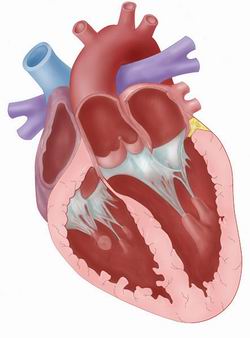
1. Be spiritually active. An important study from the University of Texas tells us that people who attend church regularly, live seven to fourteen years longer than those who do not go to church. Apparently, the fellowship, good will, meditation, inspirational words and singing together increase our ability to cope. According to Dr. Malcolm Taylor: “If you have God, family and friends, you may stumble, but you will never hit the ground.”
2. Take charge of your blood pressure. Despite steady progress over the past thirty three years, uncontrolled high blood pressure is projected to increase by 60% over the next twenty years. Tell your doctor you want to keep your blood pressure as close to goal (120/80 mm Hg) as possible.
3. Control your cholesterol. Keep your HDL high (>1.0 mmol/L), and your LDL low (<3.4 mmol/l), and total cholesterol low (< 5.0 mmol/L). High cholesterol leads to plaque, which restricts the flow of blood. Diet, exercise, and statin therapy are the keys to maintaining healthy cholesterol levels.
4. Track your blood sugar and maintain ideal weight. Obesity and diabetes track each other. As the rate of obesity goes up, so does diabetes. If you are overweight, you run a high risk of developing diabetes which increases your risk of heart attacks, strokes, blindness, amputations and impotence. Why must sugar and fats accompany every expression of love and every celebration? By reducing obesity, we are taking a swing at diabetes. Three out of four diabetics will die from heart disease and stroke. If you have the following symptoms, you should consult a doctor: Fatigue, blurred vision, excessive thirst, frequent urination, unexplained weight loss and non-healing wounds and sores. These may indicate that you have diabetes.
5. Enjoy regular exercise (30 minutes per day-every day), follow a sensible diet and get a good night’s sleep! Move those muscles. Increase your intake of fruits and vegetables, reduce fats and sugars, but most of all, eat less. Every little bit you do can ether help or hurt your health a little bit. Twenty years ago, 50% of children walked to school. Don’t be a fat maker by insisting that others eat more of what they do not need and resist being a victim of a fat maker also. Let’s be more creative about demonstrating love for each other than to force feed the ones you most care about. If you don’t sleep well, get a sleep study and then follow your doctor’s advice. Sleep apnea, a significant contributor to hypertension and heart disease, is more common among those who are obese.
6. Don’t smoke. Nobody argues with this any more: not even smokers. Smoking constricts the arteries, increases carbon monoxide in the body, lowers the good cholesterol, makes a chimney of your nose and is the primary cause of lung cancer. Smoking is our most preventable cause of premature death.
7. Access better health care, get a check up and faithfully take your medication as prescribed. It is no longer acceptable for the most vulnerable among us to receive the worst care. Just because some of us are poor does not mean that we should be relegated to poor care. All members of society deserve to receive respectful health care. If you are dissatisfied with the care that you are receiving, then seek care elsewhere. More importantly, it does no good for you to be evaluated by a physician, have your condition diagnosed and medication prescribed if you do not then fill the prescription and take it as directed.
Subscribe to:
Posts (Atom)


 Posts
Posts

