Wednesday, March 25, 2009

A Jamaican Joke


Introduction:
One of the delightful experiences I have enjoyed in the past year is having dinner and drinks with good friends and exchanging "jokes". In my travels, my wife reminds me often that jokes are culturally based and the nuances at times do not cross cultural barriers. However, all you patois speaking expatriates of the diaspora will appreciate this little joke.


Two Jamaican couples were driving in Canada and hit the jackpot! Unbeknownst to them, there is a safe driver program in Canada that rewards safe drivers. The police will pull drivers over and reward them with a thousand dollars if the driver is observed demonstrating good driving habits. The officer puts on his sirens and flashing lights and the Jamaican driver appropriately pulled over.

The officer approached the driver and instead of a traffic ticket, congratulated the driver on being selected for the safe driving award. "What are you going to do with the money?" asked the officer. The driver, having recently immigrated from Jamaica responds in his bet patois "I am going to try and get my drivers licenses sir." The driver's wife piped in:"Sir, he is only saying that because he is drunk".

The gentleman in the back seat then asked the officer for some information:"Sir, we are all illegal aliens and trying to get to the American border before dark, so we won't be in Canada long. Are we on the right highway to get to the US border". Finally, the lady in the back seat said: "Is ganja possession illegal in Canada?"

The officer continued to smile and nod his head acting as if he understood each word that was spoken and finally said: "You know, I never could understand the Jamaican accent and the cute way you all speak but have a nice day and enjoy your money!"

Friday, March 20, 2009

The Jelly Man of Norman Manley Highway


This is an editorial that appeared in The Gleaner on March 14, 2009. It concerned an attempt by the Jamaican government to close down a very hard working man who sells jelly coconut on Norman Manley highway as you leave the Kingston Airport. I titled it "Frustrating the poor, hard-working Jelly Man".

I am appalled by our government's callous disregard for citizens who show initiative. We seem to purposely and even go out of our way to frustrate the ambitions of our poor and downtrodden.

It is apparent to me that law-abiding people who want to do honest work and get by are always the brunt of government sanctions.

Imagine four men from an inner-city area: one picks up a gun and becomes a nightmare to our community; one annoys us with his constant begging. The third tries to sell jelly coconuts by the side of the road and is doing well. We should hope that one of them find work, pays his taxes, obeys the laws of the land and supports his family.

The gunman is living the high life with car, house and all the female companionship he can handle. The beggar is getting by but through the deliberate bad mindedness of some government bureaucrat, the Jelly man and his customers are now defined as criminals for buying and selling coconuts along the Norman Manley Highway by the airport.

As a society, we rob some of our citizens of an education and job skills; we rob of them of health care and we rob them of opportunity and a means of making a living.
If a professional person is stopped on the road for a traffic offence, he is often directed to proceed without a citation. When a poor man in an old beat-up car is stopped, his car is searched and he will definitely get a citation that he cannot afford to pay. The injustices are all around us.

Whenever I leave the airport, even if I am just dropping someone off, I look forward to stopping for a jelly coconut. I get to ask the Jelly Man "Wha guaan?", have a little conversation, drink the refreshing water (too bad the jelly man does not have a little proof rum to go with it), love the jelly that I scoop up with a piece of the husk and delight in the fact that I live in God's country. I have now been stopped from enjoying this little piece of heaven as it is now deemed illegal for me to stop and enjoy this little respite.

Why couldn't we have institutionalized this initiative by making it an attraction and creating a lovely lay-by? Creating a welcome center would be perfect. Why must we always frustrate the ambitions of people who are trying to make an honest living? And if the government does offer this opportunity, I hope the Jellyman will gladly help to support our country by paying his taxes.

Wednesday, March 4, 2009

An Invitation for You To Become a “Community Health Advocate”


Ten years ago when I was the CEO of the Association of Black Cardiologists, I pioneered the Community Health Advocates program as a way of motivating non-medical, faith-based organizations and individuals to help reduce the ravages of cardiovascular disease in their communities.

Even if it is just discouraging our family and friends not to eat bacon and doughnuts and walk with them around the block, I am convinced that everyone can make a contribution. Never miss an opportunity to give a little pep talk to your church, your club, your family. We must encourage each other to live healthy lifestyles. It is never too early or too late to adopt a healthy lifestyle so that children will know their grandparents and become great grandparents themselves.

Give yourself the title of a “Community Health Advocate” and immediately transform yourself into someone who makes things happen in your community. Make up a name tag and proudly adopt this title. Introduce yourself as: “I am Tom Jones, A Community Health Advocate.” It is a shortcut to becoming passionate and sincere about helping others. You will find yourself with a purpose for living with zeal and dedication—and to truly become an agent of change. In fact, President Obama and his adminsitration is calling for Community Health Advocates and forums nationwide. A few of these Advocates were highlighted at the White House Health summit on 3/5/09!

This willingness to take on challenges and these preparations are essential in all aspects of life. As noted by author and speaker Joyce Meyer, "Even if you are in a waiting season of your life, keep your motor running and be ready to go forward as soon as you get a green light." Put another way, you will never know the joy of hitting a home run in baseball or a six in cricket, if you don't step up to the plate and take a swing. Although you may strike out or bowl out, it is the score that people will remember. This is your turn at bat. Don’t just stand there take charge of your life, the life of your family and the life of your community.

I assume all of you have seen the civil rights documentary Eye on the Prize. In one scene, minister and civil rights activist C.T. Vivian led a dozen people in a historic moment by leading them in the simple act of registering to vote. As he ascended the stairs of the Birmingham, Alabama, courthouse, he was stopped by no other than Sheriff Bull Conner, who told him in no uncertain terms that he was not entering the courthouse. As the conversation ensued, Conner reached back and hit Dr. Vivian with his fist, knocking him all the way to the bottom of the stairs and thought that would be the end of that. But Dr. Vivian jumped up and again rushed up to Conner, who, disbelieving Vivian's courage, stepped out of the way so the first African Americans in Alabama could register to vote. Is there a C. T. Vivian among you ready to address the scourge of healthcare disparities?

Ladies and gentlemen, each and every day, whether it is the United States or Jamaica, too many people die from heart disease and stroke. These people are your parents, your grandparents, your uncles and aunts, and even your children.

Cardiovascular disease is the thief that is stealing our loved ones. It is the thief that will claim the lives of half of us if we don't act quickly. I am appalled that a disease that is preventable is a silent killer. It ought to make you angry that Uncle Albert, Mother Blake, and Rev. Simmons died prematurely—and they did not have to, if they had just adopted a healthy lifestyle.

I have been told that every time you do a good deed, you give birth to a new guardian angel and every time you act self-absorbed, do things half-hearted, and every time you say "whatever," you lose an angel. How would you like to have a lot of angels in your corner? This could be your path.

My grandmother raised me, and on occasions when I did things to make her proud and happy, she would say that I could bring a little bit of heaven down to earth. Lately, I have been admitting to this gift because I now recognize that heaven is not a place we go to after we are dead and it's not "up there" somewhere— heaven is inside every well-meaning person, especially those who volunteer to work in their communities as "Community Health Advocates." You see, heaven is in the heart.

Martin Luther King, Jr told us that we can all be great because we can all serve. He said that "if a man is called to be a street sweeper, he should sweep streets even as Michelangelo painted, or Beethoven composed music, or Shakespeare wrote poetry. He should sweep streets so well that all the host of heaven and earth will pause to say,’ here lived a great street sweeper who did his job well.'" If we want to be considered great, we have to serve, and the true path to joy is to serve others. Don't live to get; live to give. Do your duty because it is the right thing to do.

Wednesday, February 18, 2009

My Resume


I was born at Kingston Jubilee Hospital in Kingston on July 18, 1943. Within my first four years of life, World War II ended, my father moved back to China and my mother migrated to the United States and started another family. So, I grew up in “The Bush” (Woodlands District, St. Elizabeth) being nurtured and protected by my Granny, Mrs. Rosella McKenzie (Miss Rosie). After my fifteenth birthday, (April 3, 1959) my brother Earl and I rejoined my mother and her new family in the United States.
In the fifty years since 1959, I lived in Morristown, NJ; Indianola, Iowa; Washington, DC; Columbia, MD; Baltimore, MD; York, PA; Sacramento, CA; Los Angeles, CA; Miami, FL., and Atlanta, GA. After all my roaming, I returned to Jamaica after I retired in 2008 and began to get to know my birth country for the first time!
I am currently, President of Heart Institute of the Caribbean Foundation (HICF) where I facilitate open access to cardiovascular care for people who cannot afford it. Contributions are being solicited and would be appreciated. We are a 501(c)(3) not-for-profit organization in the United States as well as a registered NGO in Jamaica with the Registry of Companies. I love to write and give talks on a wide range of topics and to a wide range of audiences. Hopefully, my sermons and speeches, as well as the books and articles I publish will help to improve the human condition.
I have been a college professor, a hospital administrator, Director of a medical research center and, between 1986 and 2008, served as the CEO of the Association of Black Cardiologists (ABC) based in Atlanta. I have dedicated a great deal of my life trying to reduce the ravages of heart disease, diabetes and stroke. Dr. Elijah Saunders and I pioneered several community outreach efforts including being first to organize churches as health promotion centers starting in 1979. I developed the “Community Health Advocates” as well as the Barbershop and Beauty salon blood pressure control programs. I also coined the mantra: “Children should know their grandparents so they will become great grandparents” that was adopted by the ABC in 1998 as well as develop the “Seven Steps to Good Health”.
I received his B.A. from Simpson College (1967), an M.A. from American University (1970), my AGS in rehabilitation (1974) from the University of Maryland, and a Ph.D. from Walden University (1977) in educational psychology. I am also a lawyer. I received a JD from Dickinson School of Law in 1990 and I continue to be a member of the Georgia Bar.
Among my awards are: Chairman’s Award (American Heart Association/Howard County);Leadership in Public Health (Centers for Disease Control/CDC); Health Promotion (American Legacy Magazine); Humanitarian Service Award (Simpson College); Father of Church High Blood Pressure Programs (Maryland Association of Blood Pressure Measurement Specialists); Distinguished Research Award (International Society on Hypertension in Blacks); Leadership in Public Health (COSEHC).
I am married to Dr. Stephanie Kong, a Pediatrician who has been a managed care executive for 30 years. We are the parents of four children (Jillian, Freddie, Melanie and Aleron) and grandparents to five beautiful grandchildren (Mackenzie, Brooks, Audrey, Vincent and Kai). Our hobbies include traveling (we have visited over 100 countries), dancing, swimming, golf, dominoes, bid whist and bridge. However, as I walk through the wilderness of this world, my passion is to persue the truth about my God, myself and my environment. "Nam et ipsa scienta potestas est."

Between 1994 and 2008, we were active members of Providence Missionary Baptist Church (Rev. Gerald Durley) in Atlanta where I faithfully served the pastor and the congregation on the Deacon Board while my wife served on the Board of Trustees. We know the Lord. A little time in The Son saved me from being burned. A lot of kneeling keeps us in good standing because he who kneels before God, can stand up to anyone.

Tuesday, February 10, 2009

Letter to The Gleaner RE: Jamaica a Hurting Nation


Thanks for Dr. Karen Richards’ piece (Sunday, February 08, 2009) on “Jamaica Drowning in a Sea of its Own Violence,” diagnosing us with Borderline Personality Disorder (DPT) to explain why Jamaica has the highest murder rate in the world (64 per 100,000). Kingston is convulsing with disorder and collapsing under the weight of crime.
In the face of feeling vulnerable, the wealthy are willing to spend millions on security rather than contribute to social institutions that have the promise to uplift people and perhaps take away their motivation to commit crime. We need to recognize that no one, no matter how rich, can protect themselves from crime. We can turn our homes, cars and workplaces into garrisons and we will still be vulnerable.
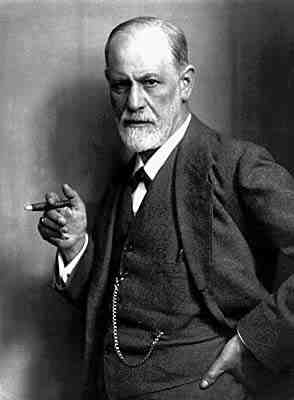
If we must use psychological models, I prefer Sigmund Freud’s characterization to explain the personalities in Jamaica.
I often ask friends who they believe are the most powerful people in Jamaica. Are they gunmen? Dons? Politicians? Religious leaders? Rich people? Policemen or babies? If you define power as one’s ability to quickly get what they want, then the answer is a crying child. The distressed child, who is hungry, wants his diaper changed or wants comfort will cry until his needs are met. Nature programmed us to respond urgently to children’s crying.
A child is all "id". A child has no ability to delay gratification or consider anyone else’s needs: “I want what I want when I want it.” “If I itch, I want it scratched.” Some of us never grow out of this immaturity. “I will kill anybody who disrespects me.” These are the grudgeful and bad minded people who always want something for nothing and who want to prosper at someone else’s expense. This childish conduct can be quickly recognized on the roads from the drivers who put everyone at risk by inappropriately overtaking others because only their needs matter. The other day I witnessed an accident because one of the speeding buses decided it needed to drive on the wrong side of the road and incorrectly merge into traffic only to run into the car that had the right of way. Everyone at this point was inconvenienced; the passengers of the bus, the cars behind the accident and the driver whose car was smashed.
Ordinarily, as one matures, we learn a reality principle or the cause and effect rules of life which Freud calls the "ego". If I put my hand in a fire, it will burn. If I fall down, it will hurt. If I steal or otherwise break the law, the police will arrest and imprison me. A healthy fear of punishment takes hold. We learn to value the rights of others and respect boundaries. If I treat others special, they will be kind and helpful to me in my hour of need. If I work hard, develop meaningful skills, knowledge and attitudes, I can find employment or own a business so I can support myself and take care of my family. If there is no family structure or if the rules of society are not predictably enforced, some people will not believe they will be punished for crime and that they can get rich quick and always get their way by intimidating others---including their parents and the police. It troubles me greatly that less than a third of all homicides are cleared up even with the help of Scotland Yard. Killers now believe (and rightly so) that they can get away with murder. Do we really want the world to believe that our country is run by “outlaws”?

Finally, Freud believed that we also develop a super-ego. Our family, our community, our religious institutions and our culture impress ethics on us. If society is successful, we feel guilty when we don’t do “the right thing”. We don’t want to be disgraced. We are embarrassed if we violate a social code like going to a funeral wearing a bathing suit. Our conscience becomes our guide. If we have a conscience, we are motivated to be kind and generous to needy relatives, the sick and the elderly. If you don’t have a conscience, a criminal may even consider robbing the most vulnerable if they have something he or she wants.
Ideally, we need a balance. We need the "id" so we can have a good time. Dancing, partying, playing games, competing, playing tricks on others, telling jokes, laughing and that whoopee feeling all come from the "id". There is nothing wrong with fun, especially after the work is done and you have actually accomplished something. We also need to know what is real (ego strength), as well as being responsible parents to restrain the less irresponsible among us from over-indulgence and to guide and nurture the next generation. I don’t believe we ever want to be so guilt stricken that we need to beat up ourselves every time we enjoy ourselves. However, we should also learn that moderation and balance are the keys to a truly successful life.
Imagine a little jockey (our developed ego and super-ego) riding a big, powerful horse (our id). Even though the horse weighs ten times more than the jockey, the horse can be skillfully controlled by the jockey. If the horse is unbridled, however, the id cannot be controlled and we become undisciplined, unproductive and completely selfish.
As a society, if we truly want to stop homicides we can start with enforcing the rule of law for small infractions, which will lead to stopping the major ones. Jamaica needs solid and unwavering enforcement of the law, first by each individual doing the right thing and in those cases in which a segment of our society refuses to do the right thing; the police can rein them in. Specifically, we should put 1,000 traffic police on the road in unmarked cars with video cameras to record the outrageous infractions that occur every minute of every day as evidence to be presented in court so dangerous drivers will be prosecuted and punished. Treat these offenders like drunken drivers. Lock them up and confiscate their vehicles. The same ten percent that is causing havoc on our roads are also our undisciplined criminals. Get them off the road.
It is going to take the church, schools, families and all the institutions of society to train the jockey---to develop our ego and superego so that law and order can prevail. I am in a constant debate with my wife about whether God blesses honest, disciplined, hard working considerate people. I believe that good people also succeed because everyone wants to do business with them and crave their company. Who wants to be friends with or do business with people who lie, cheat and commit crimes? In the final analysis, good people will always prosper because no one ever secures happiness by committing crimes.

Monday, February 2, 2009

A wealthy Jamaican gentleman

A wealthy Jamaican gentleman collided with a telephone pole traveling 100 miles per hour but survived. The police found him on the side of the road lamenting and crying about the loss of his BMW. When the police arrived, they commiserated with him about the loss of his car but they pointed out that his left arm was completely severed. He looked where his arm used to be and screamed: "Where is my Rolex?"

Sunday, February 1, 2009

Investing in the Children

One of the most glaring observations I made upon my return to Jamaica is that we, as a nation, lack the commitment to advance the educational needs of our youth. A what a guawn? So many of our pickney appear to be lost to hope, prospect, and spirit that will lead them to a better future. Many of our youth in Kingston, where I live, receive only 4 hours per day of educational instruction which then leads to many idle and wasted hours which inevitably lead to underachievement, frustration, violence, and political upheaval. Ignoring the needs of our youth has now become the paramount political problem of our time as youth gangs take over our communities.

On the other hand, reaching out to our youth and investing in them, becomes the cornerstone for future generations to achieve unprecedented educational objectives, the ability to adequately provide for their future families, and actively participate in the uplifting of our nation. There are communities across Jamaica where parents and local leaders are investing in children and benefiting. It still takes a village to raise a child.

I am appalled that overall, so little resources are being invested in the youth of Jamaica. It is an extremely competitive world. While our children attend school for only four hours per day, the norm in Japan is eight hours per day, six days per week. The excuse in Jamaica is that there are not enough funds to build schools and hire teachers to provide an adequate elementary education. As a result, the pass rate for the CXC and GCE are extremely low. We cannot be proud of that.

If the current government will not do better, can I recommend that our churches at least provide an alternative school system where volunteers will tutor our children for an additional 4 hours per day so our children can learn to play a musical instrument, increase their religious knowledge, learn geography, develop their skills in art, dancing, music, voice, golf, tennis, badminton, football, running, swimming, cricket, chess, card games, to read better, to write, to spell, learn computer related skills and to get them off the street? Jamaica has a lot of retired people who would love to do something substantial with their time. An opportunity to teach a child would be a very rewarding endeavour. If you think education is expensive, you should try ignorance. What does it profit our country to have a workforce that is non-competitive in the world market?

Each day in the jungles of African, an antelope wakes up and know that if he is to survive another day, he must outrun the lion. The lion wakes up realizing that if he is to eat today, he must outrun the antelope. The world is a very competitive place; we must prepare our youth to prosper. We get used to the idea that our athletes are the best in the world. I would like to believe that we can also be the best in the world in all fields of human endeavour. We can be that good if we no linga.

Increased material output (productivity) means that our people will have access to both material goods, the culture we crave, with the luxury of time to create, invent, produce, and enrich our souls. Our gene-pool is probably the best in the world. With this dowry, the lynch pin for releasing that potential is the development of our youth. Their capacity should not be thwarted.